


6 Vulnerable Economic Inequality Examples of People
6 Vulnerable Economic Inequality Examples of People
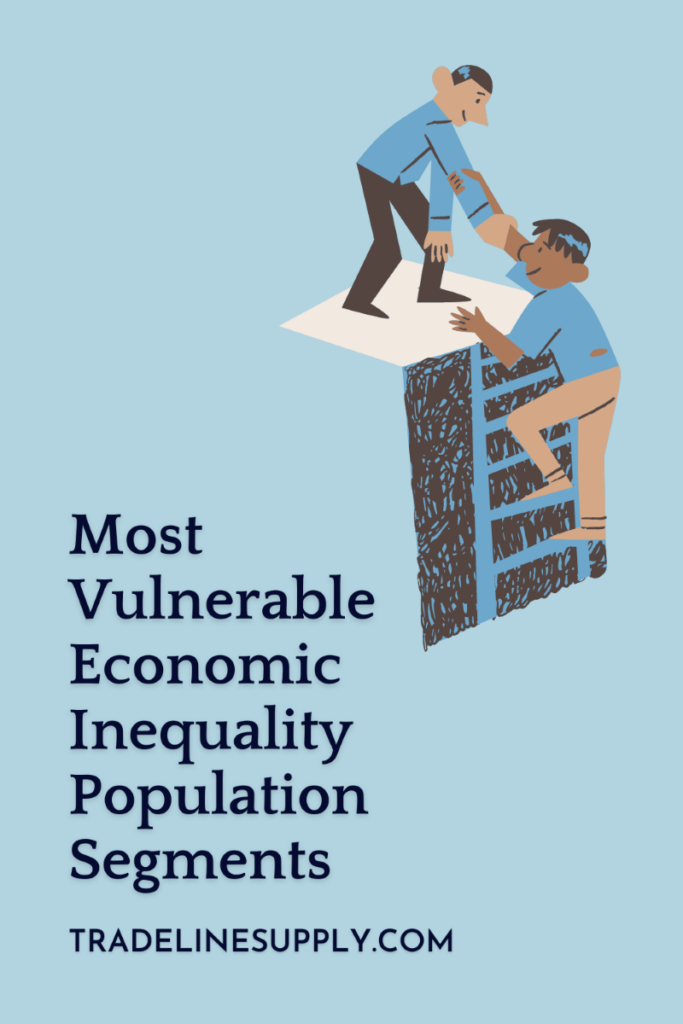 Economic inequality is the unequal distribution of wealth, income, and opportunity between different groups in society. It affects social structures deeply because it leaves some communities more vulnerable to poverty and harm than others.
This inequality affects our society—because with more equality we have a stronger economy.
Six most vulnerable populations bear the brunt of inequality in income, credit, and more. One of the ways we can raise the economy is by lifting up these vulnerable population groups. We do this with education, government-funded programs, solidarity, and mutual aid.
Economic inequality is the unequal distribution of wealth, income, and opportunity between different groups in society. It affects social structures deeply because it leaves some communities more vulnerable to poverty and harm than others.
This inequality affects our society—because with more equality we have a stronger economy.
Six most vulnerable populations bear the brunt of inequality in income, credit, and more. One of the ways we can raise the economy is by lifting up these vulnerable population groups. We do this with education, government-funded programs, solidarity, and mutual aid.
Key Vulnerable Economic Segments
Here are the six key vulnerable economic segments.Younger Generations
The cost of college is rising rapidly. That negatively affects younger generations who are trying to make their way in the world. Previously, college could be paid for by working a part-time job. Now, it’s almost quadruple the cost. The Biden administration has recognized this to be a problem and has announced that the government intends to forgive $10,000 of debt for individuals making less than $125k and families making less than $250k, with an additional $10,000 in forgiveness for those who received the Pell grants while in school. This decision is still being litigated in court, but even if the debt forgiveness plan goes through, that doesn’t mean that the problem of college tuition has been fixed. It would just be a bandaid on the wound. And $10,000 to $20,000 doesn’t offer much help to those with a significant amount of debt. The average undergraduate comes away with $36,000 of debt. So $10,000 would bring their total down to $26,000 and $20,000 would bring their total down to $16,000. Those who have gone to grad school likely have upwards of $50,000 in debt.
Younger Generations and Credit
Americans owe $1.75 trillion in student loan debt. Millennials are debt averse because of this large burden of student loan debt. The average student graduated with $36,000 of undergrad debt. And the average student loan payment is $300. With such large payments, they have trouble qualifying for mortgages. They’re more likely to be living with their families than on their own than previous generations to solve their housing dilemma. College is less of a priority for Gen Z than it was for Millennials because their parents graduated into recessions and didn’t want their children to do the same. Instead, Gen Z workers are going into the trades and becoming entrepreneurs. However, they’re still having to live with their families because of housing “shortages” in America.How Can We Support Younger Generations?
- Encourage responsible credit card usage.
- Encourage student loan payoff.
- Share generational wealth.
Homeless (High Barriers to Economic Entry)
Homeless populations find themselves also economically distraught. There are over 550,000 homeless people every night in America. These half a million people could see a difference if they were given economic support. Those on the verge of being homeless might be able to see an advantage of programs that help give economic support. In fact, giving $1,000 could keep the homeless person off the streets for 2-years.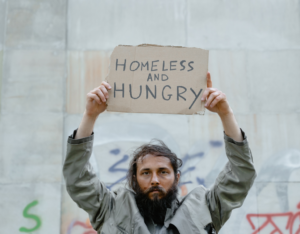 But what happens when homeless communities have been unhoused for a long period of time?
- They become unbanked.
- They lose access to credit.
- They become credit invisible.
Lack of Address Prevents Homeless From Participating in Financial Society
Many homeless people rely on cash transfers for a substantial part of their income. But since few people carry cash, it’s not a reliable source. Worse yet, they can’t collect money via Venmo or Zelle because having an address is a prerequisite for opening a bank account, which is a necessity if they want to be able to use those apps. Plus, if you’re unbanked, you may have to use expensive products in order to cash your checks from work. And you might be required to provide a home address to even start working at a job. Because of the rules and regulations surrounding housing and banking, the unhoused population finds themselves at a distinct disadvantage from the rest of society. They aren’t able to participate in the economy, and it harms America’s GDP.
Unequal by Race
In the United States, despite protections put in place by the government to address credit equality, these population segments are observed to be unequal. Black and Hispanic Americans often have lower credit scores, according to CNBC. Over 50% of the Black community reports having no credit or a poor to fair credit score, defined as a score of less than 640. Why? See our article, “What Happened to Equal Credit Opportunity for All?” where we discuss how the “five C’s” (character, capacity, collateral, capital, and conditions) affect credit with respect to different demographics. These negative implications harm their credit, and affect how people of color can interact with society. Poor credit does more than just harm your financial well-being. You’re less likely to be approved for housing, your insurance premium goes up, and it can even affect your ability to obtain certain jobs!Racism in the Workplace and Income Inequality
Unfortunately, racism also affects people of color in the workplace, where they face discrimination and are paid less for the same work than their white peers. For example, Latina women are paid 54 cents for every dollar a white man makes. What does that mean for people of color overall? The average Black household is 10 times poorer than the average white household. This negatively affects how they are able to interact in the economy. If you are making considerably less than your counterparts in the same position, you cannot build the same amount of wealth—including but not limited to investing, real estate, retirement, and other long-term goals. And, importantly, you have less wealth to pass down to future generations.LGBT Community

Women
Our treatment of women in America isn’t great. White women earn 82% of what men earn, and women of color earn even less. Black women earn 64% of what white men earn and Hispanic women earn only 57% of white men’s earnings. The gender pay gap widens over a woman’s lifetime. Women in their 20s and early 30s earn a few hundred dollars a paycheck less than men, but when women reach their 40s and 50s, the gap widens to thousands of dollars less each month.Occupational Segregation
Unfortunately, it gets worse. Women-led professions trail male-led professions when it comes to earnings. And women, especially women of color, are more likely to stay in low-wage work. Women make up two-thirds of all tipped workers and are less likely to work white-collar jobs than men are. Additionally, the percentage of Black women who are full-time minimum-wage workers is higher than that of any other racial group.
Women and Student Loan Debt
Not only do women earn less collectively, but we have more debt than men do, and that includes student loan debt. Unfortunately, statistics show that women carry two-thirds of the national student loan debt. Women are more likely than men to have high monthly payments, despite earning less than men. The average student loan payment among women is $307; this cuts into their ability to pay bills and get ahead. Black women carry the most student loan debt. After 12 years of paying down student loans, Black women owe an average of 13% more than they borrowed.Gender Investment Gap
Additionally, women are less likely to invest than men. In part, this phenomenon is because women are taught to save money from a young age whereas men are taught to invest. (Ironically, women’s portfolios consistently outperform those of their male counterparts.) The pandemic has encouraged more women to invest, but we still trail behind men, who invest more aggressively than women. This investing gap could cost women millions over their lifetime.Migrants & Refugees
 Credit is a challenge for refugees, just as it is for other minority groups.
There are two main challenges that face the migrant community: lack of ability to build credit and remittance payments.
Many immigrants feel that they have trouble accessing credit. And as established, credit is essential to a good life in America.
The other major problem affecting migrants and refugees is remittances. This is the practice of sending money to family members outside the United States. A lot of migrants’ families back home depend on remittances to live and many immigrants living in the United States feel they’re unable to save because of this financial burden.
Credit is a challenge for refugees, just as it is for other minority groups.
There are two main challenges that face the migrant community: lack of ability to build credit and remittance payments.
Many immigrants feel that they have trouble accessing credit. And as established, credit is essential to a good life in America.
The other major problem affecting migrants and refugees is remittances. This is the practice of sending money to family members outside the United States. A lot of migrants’ families back home depend on remittances to live and many immigrants living in the United States feel they’re unable to save because of this financial burden.
Intersectionality
Anytime one of these populations intersects with another, it’s called intersectionality. The more intersections of marginalized identities a person has, the more challenges they may face. These intersections are crucial to take into account when you’re trying to help vulnerable communities in your area. You might not understand some of the nuances without them. Overall, each of these six populations has certain difficulties in building credit, accumulating savings, and achieving other financial milestones. But it’s not for lack of trying. They face trials and tribulations that the average American doesn’t. Do you know the #1 Tradeline Secret?
Use the secret to unlock your full tradeline power.
Use the secret to unlock your full tradeline power.
Author
Moriah Chace is an award-winning, queer Gen Z author known for promoting financial literacy. Moriah's financial articles have appeared in The Motley Fool, Buzfeed, Bankrate & Bigger Pockets, Moriah is a leading voice in helping people take control of their finances. As a lover of all things DIY, she spends her free time fixing up cars from the 90s and vintage RVs.
BROWSE ALL CATEGORIES
LATESTCREDIT VENDOR RESOURCESLEGAL & ETHICAL TOPICSCREDIT REPAIR & CREDIT SCORE INFORMATIONTRADELINE RESOURCESCOMPANY NEWSGUEST ARTICLES BY CREDIT EXPERT JOHN ULZHEIMERINFOGRAPHICSPERSONAL FINANCECREDIT COUNTDOWN VIDEOSCREDIT CARDSLOANSBUSINESS CREDITBROKER PARTNER RESOURCESARTICLE
Related posts
Credit Card Mistakes to AvoidWhat Is a Good Credit Score? 7 Must-know EssentialsA Guide to Credit Card Fees and How to Avoid ThemHow Do Tradelines Work?What’s the “Right” Number of Credit Cards?Tradelines 101 [Infographic]With Economic Equality, We All BenefitWhat Happened to Equal Credit Opportunity for All?
Comments (0)
Comments (0)
MOST POPULAR ARTICLES
- How to Choose a Tradeline: A Buyer’s Guide
- Common Mistakes Made When Buying Tradelines
- Tradelines 101 [Infographic]
- Credit Repair vs. Tradelines [Infographic]
- Tradelines: What You Should Know About Building Credit
- How Many Tradelines Do I Need?
- What Happened to Equal Credit Opportunity for All?
- The #1 Secret on How to Unlock the Power of Tradelines
* Tradeline Supply Company, LLC does not guarantee credit score improvement. We provide a tradeline marketplace platform. Tradeline non-postings may occur and will result in a refund or exchange.